The Big Story
Quick Take:
-
Housing got substantially more affordable on a year-over-year basis in December.
-
Rates continue to fall, as lending markets price in lower long-term interest rates.
-
Inventory and sale metrics are roughly in line with what we were seeing around this time last year.
-
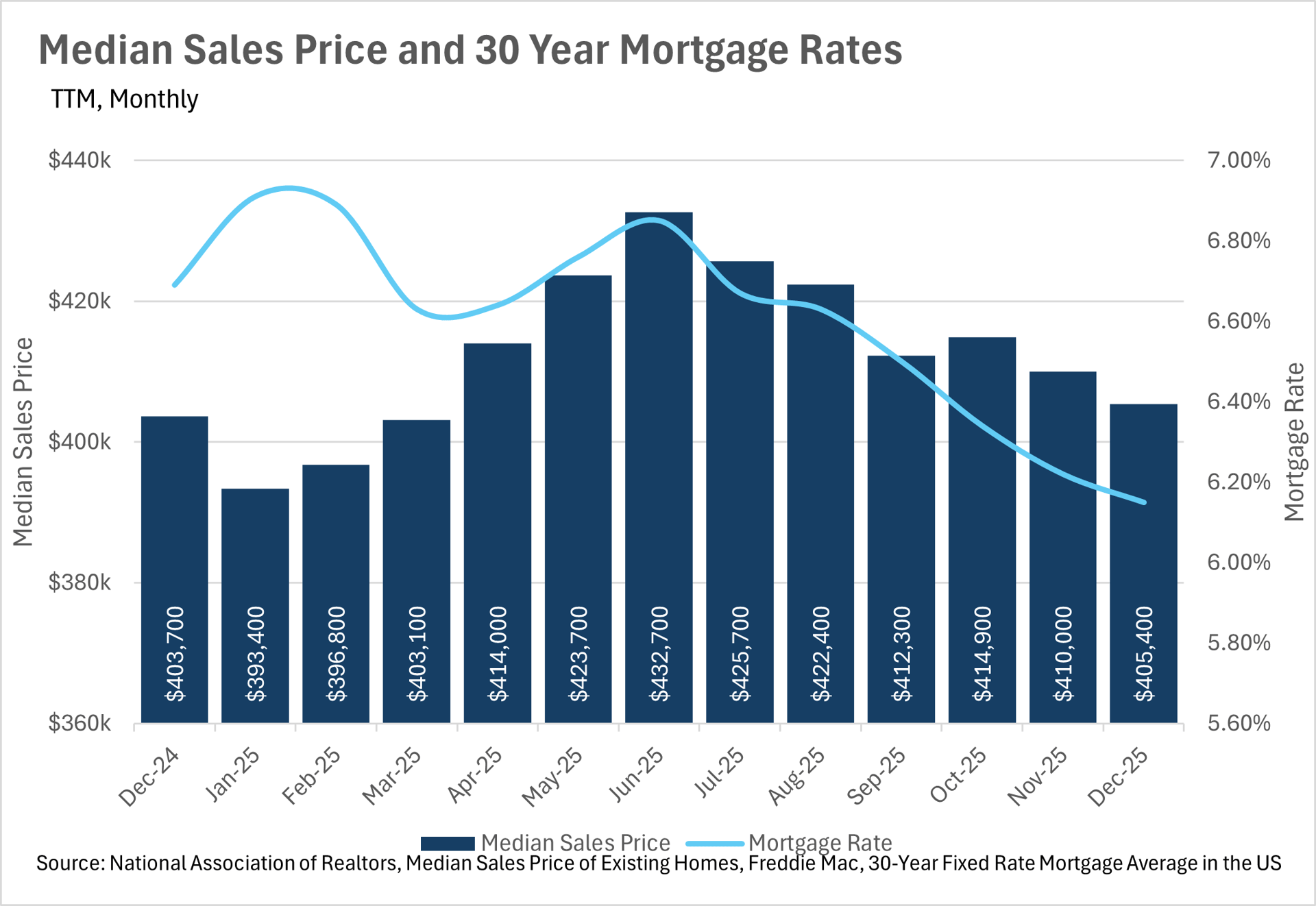
Despite the fact that we’ve seen interest rates come down quite a bit over the last year, median home sale prices are roughly in line with where they were last year!
Note: You can find the charts & graphs for the Big Story at the end of the following section.
*National Association of REALTORS® data is released two months behind, so we estimate the most recent month’s data when possible and appropriate.
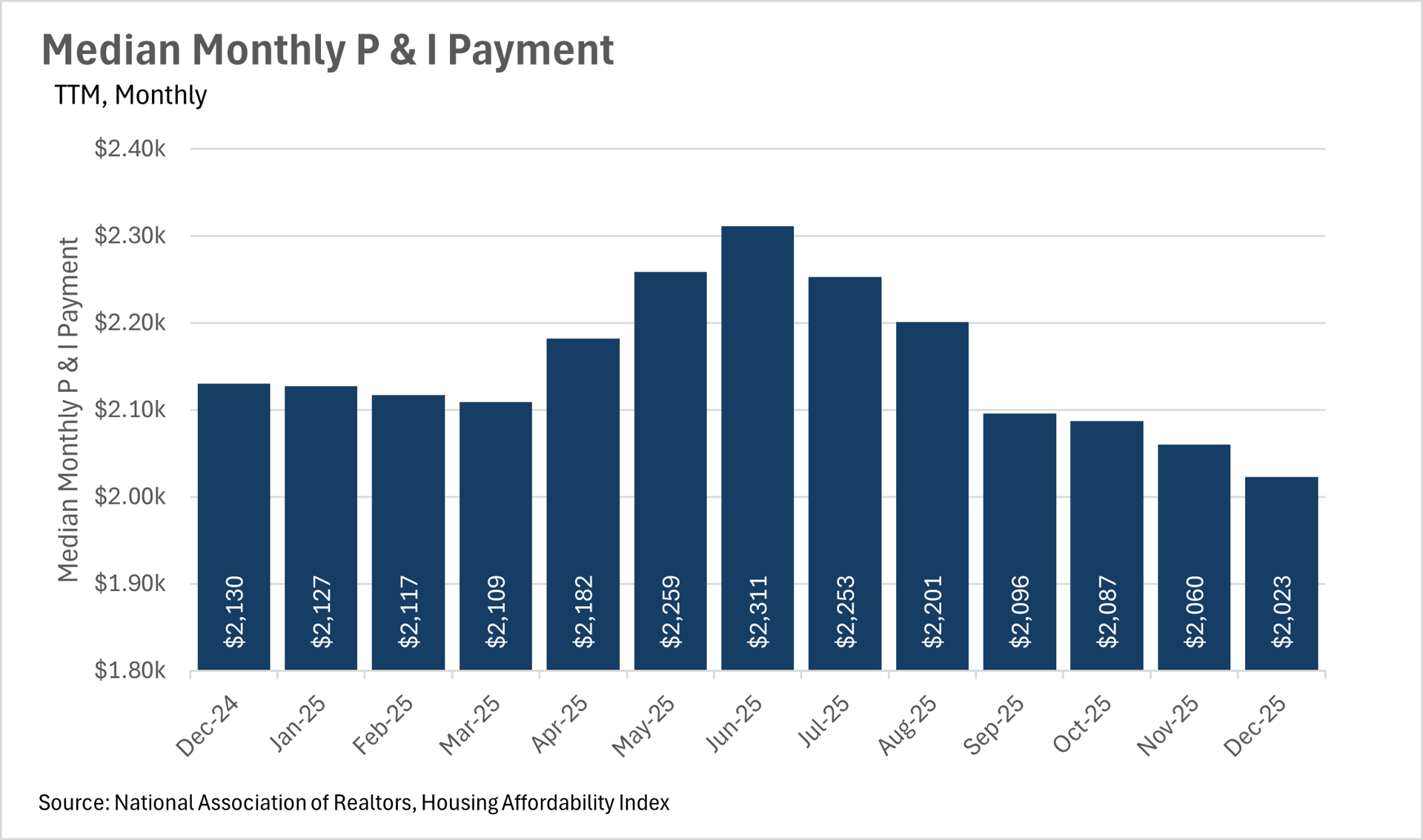
As interest rates fall, median monthly P&I payment has fallen too!
Interest rates have been in a downward cycle for quite some time, as the Federal Reserve has been lowering the federal funds rate. As you might expect, that means that the median monthly P&I payment has declined by quite a bit too. Right now, the median homeowner is paying $2,023 per month to service the P&I on their mortgage, which is down 5.02% from $2,130, just a year ago. This is great for the average American, as it means they have more money in their pocket to spend, or potentially save for their next move! In the beginning of December, the average 30-year mortgage rate was 6.15%, and has continued to fall since!
Mortgage rates are at the lowest level we've seen in quite some time!
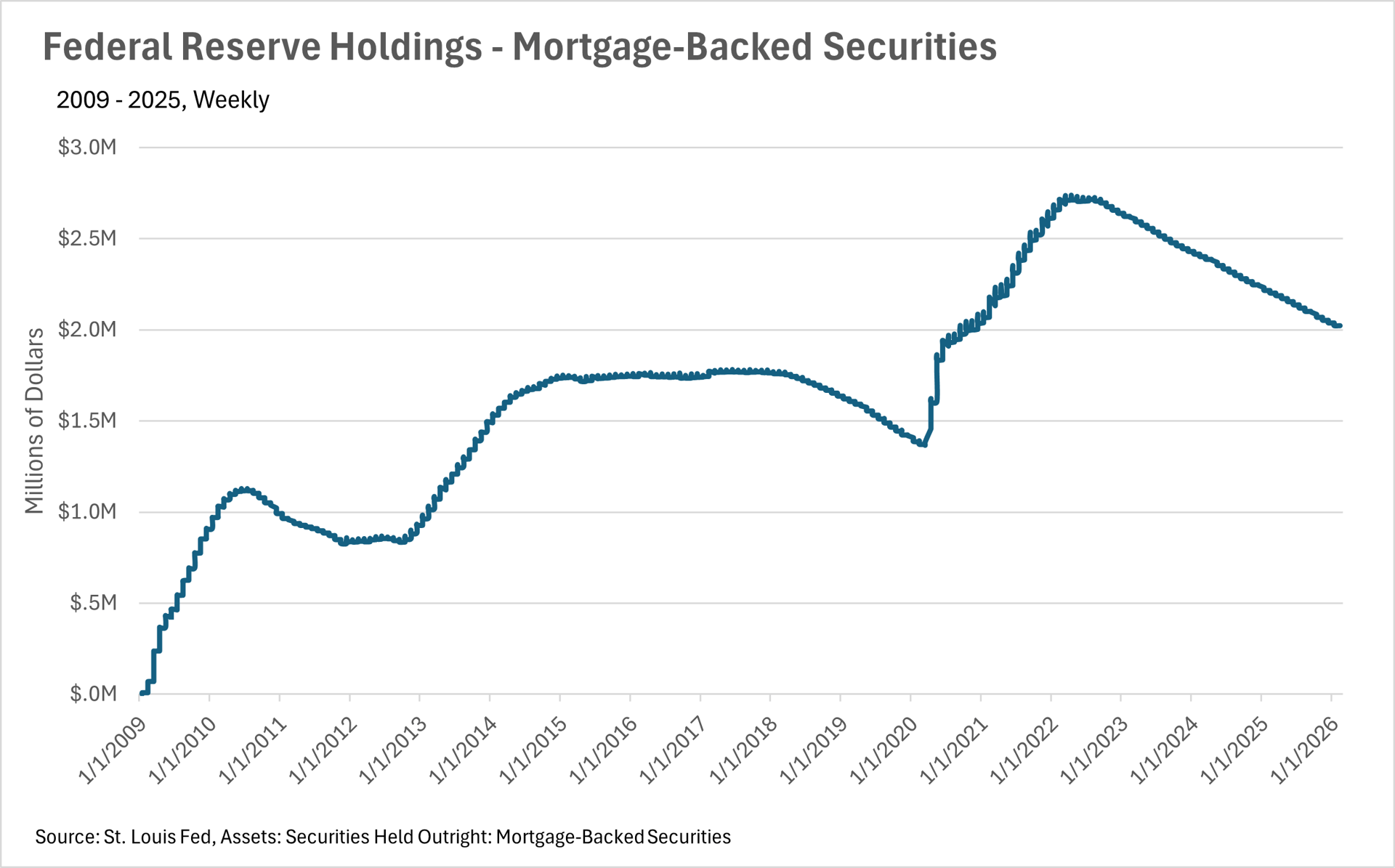
Fortunately for home buyers and sellers, the lending markets are beginning to believe that interest rates will remain low in the near and medium term future. This has led interest rates to continue inching down almost every month. In the past few weeks, we’ve seen the average 30-year mortgage rate at the lowest level it’s been in the past three years, which is tremendous news for the housing market. Unfortunately though, it doesn’t seem like the Fed will lower rates during the next FOMC meeting, as CME FedWatch currently has the probability of a March rate cut at just 7.9% at the time this was written. However, if you extend your time horizon out a bit, it does seem like there’s a good chance we see a rate cut or two throughout the rest of the year.
Ibventory and sale metrics are roughly in line with last year
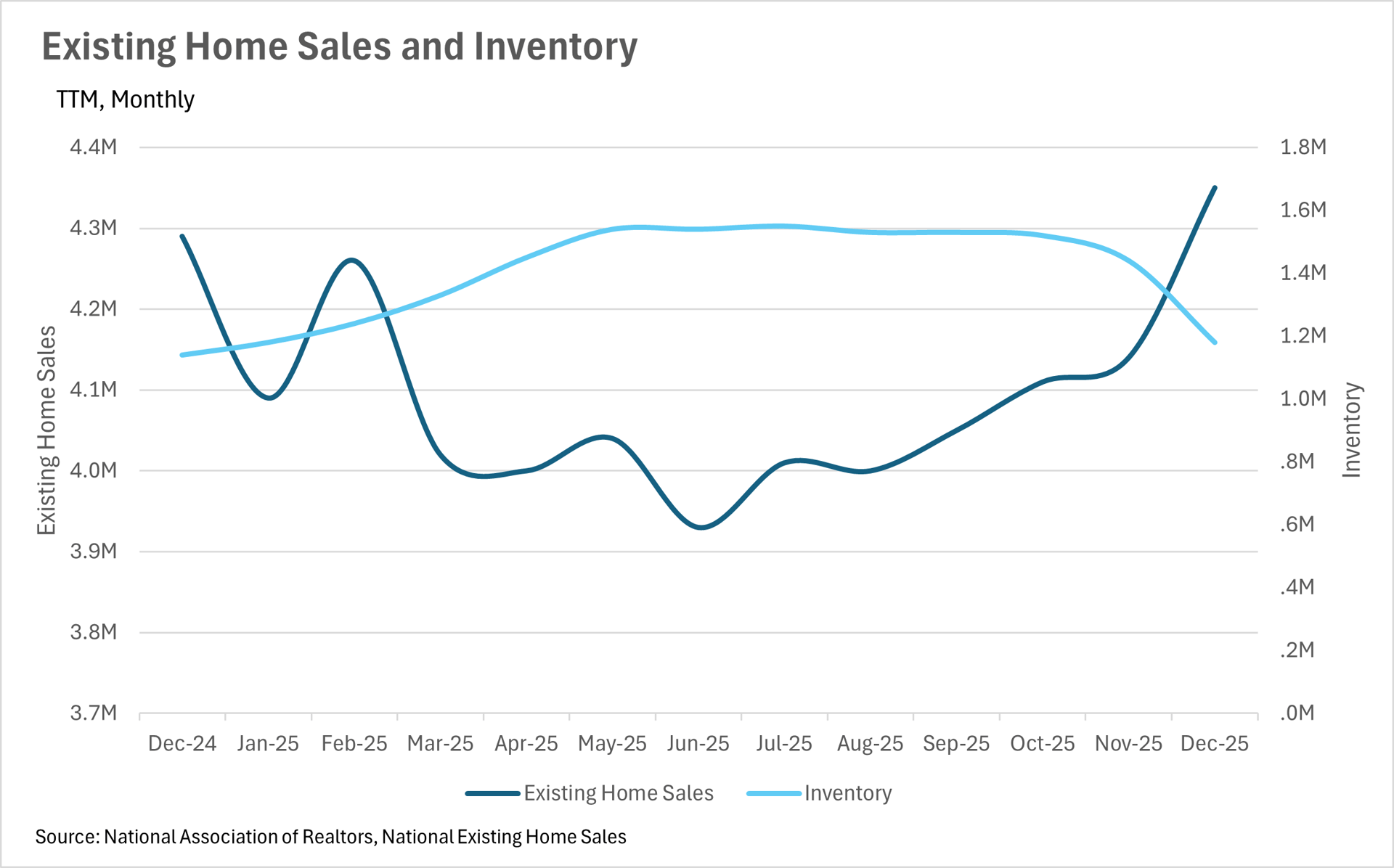
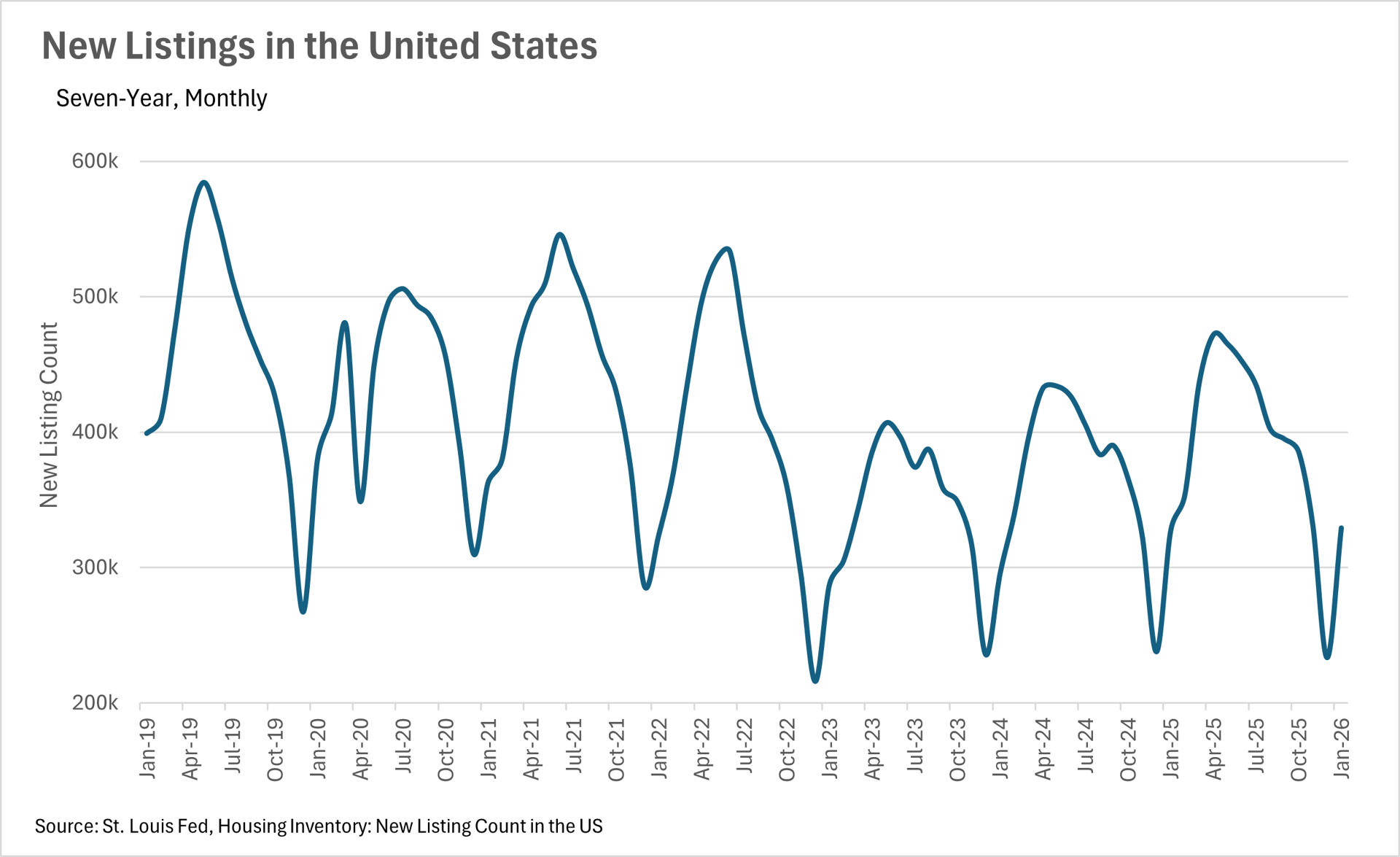
Although interest rates are coming down, and housing is becoming more affordable, we’re not seeing much change in terms of inventories, new listings, or existing home sales. Existing home sales and inventories are up 1.40% and 3.51% on a year-over-year basis, respectively. At the same time, new home listings are up just 0.68% on a year-over-year basis. This suggests that there are still a lot of buyers waiting on the sidelines for rates to come down even more before they pounce on their next home. It’ll be worth paying attention to all of the metrics we track as we move through the seasonally slow winter and into the spring and summer when the market really heats up. If we see a rate cut or two prior to the first heat wave of the year, we could see some bidding wars throughout the summer!
We're likely to see rates stay where they are in the near term
As we mentioned above, we are likely to see rates stay where they are at least in the next FOMC meeting or two. While there was some speculation that the next appointed Fed Chair would create a Fed that is less autonomous in it’s decisions, the market does not believe that future Chairman Warsh will be the wildcard that many were anticipating. This can largely be supported by the fact that we’ve seen precious metals sell off precipitously recently, as these are typically considered a hedge when the dollar is less-than-stable. However, only time will tell, which means it’ll be more important than ever to pay attention to Fed commentary!
It’s important to note though, that all of this is what we’re seeing at a national level. As we all know, real estate is a highly localized asset, which is why you should check out what’s going on in your local market below in the Local Lowdown!
Big Story Data
The Local Lowdown
Quick Take:
-
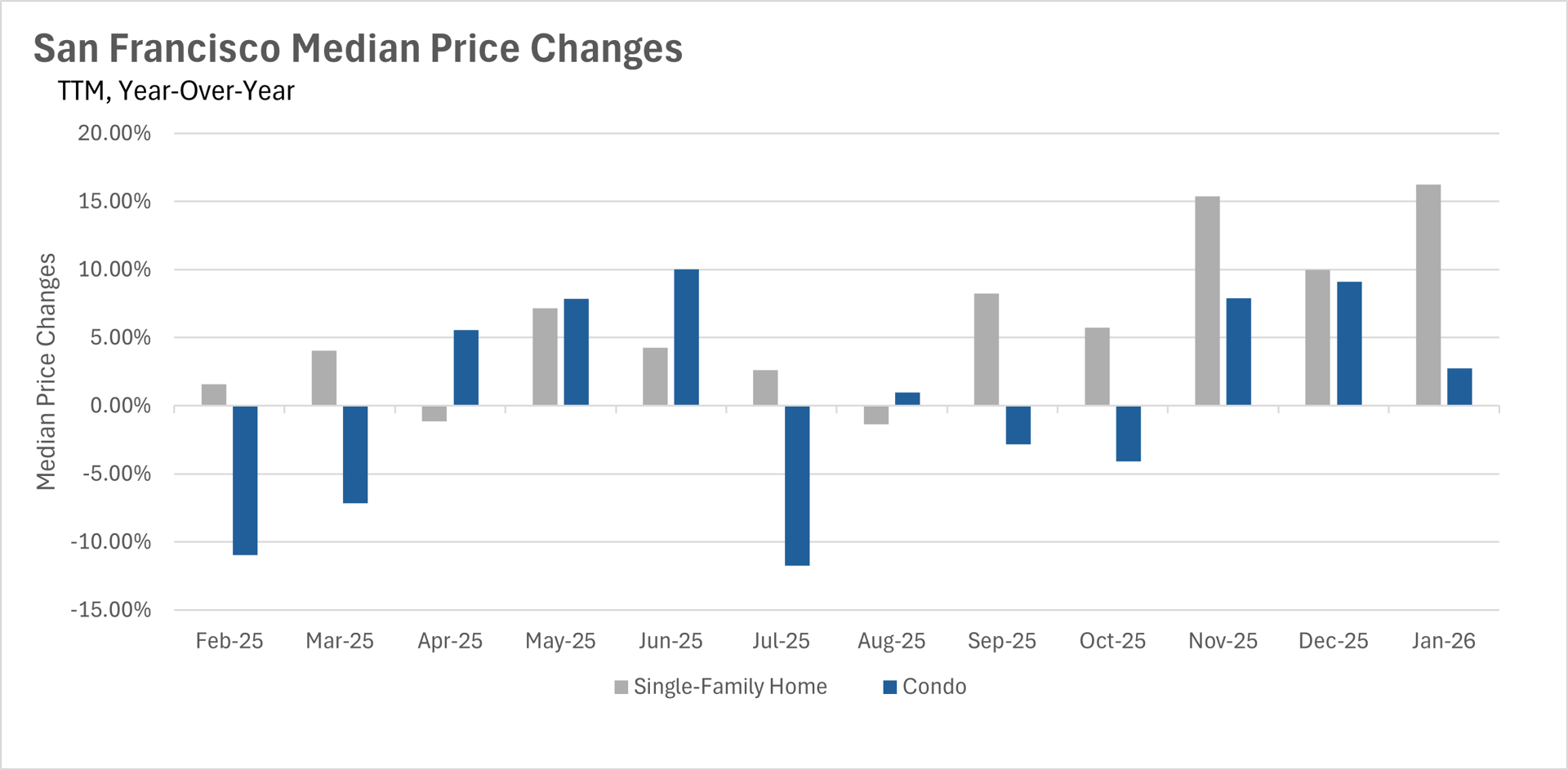
Single-family home prices surged by more than 16% year-over-year, marking one of the strongest January performances in recent memory.
-
Inventory levels remain severely constrained, with total listings down nearly 40% compared to last year.
-
The average single-family home is selling in just 13 days, more than half the time it took last January.
Note: You can find the charts/graphs for the Local Lowdown at the end of this section.
San Francisco kicks off 2026 with explosive price growth
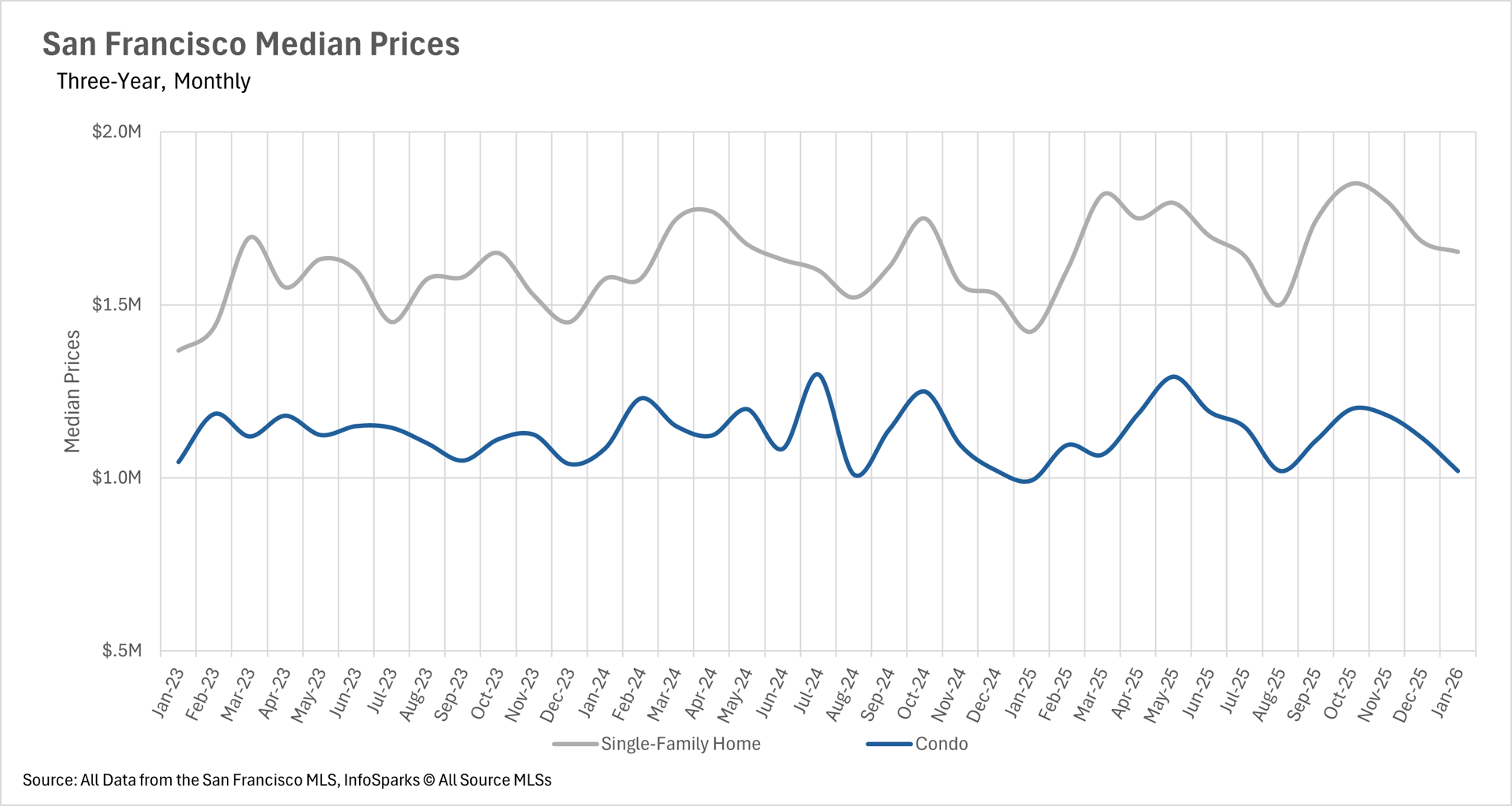
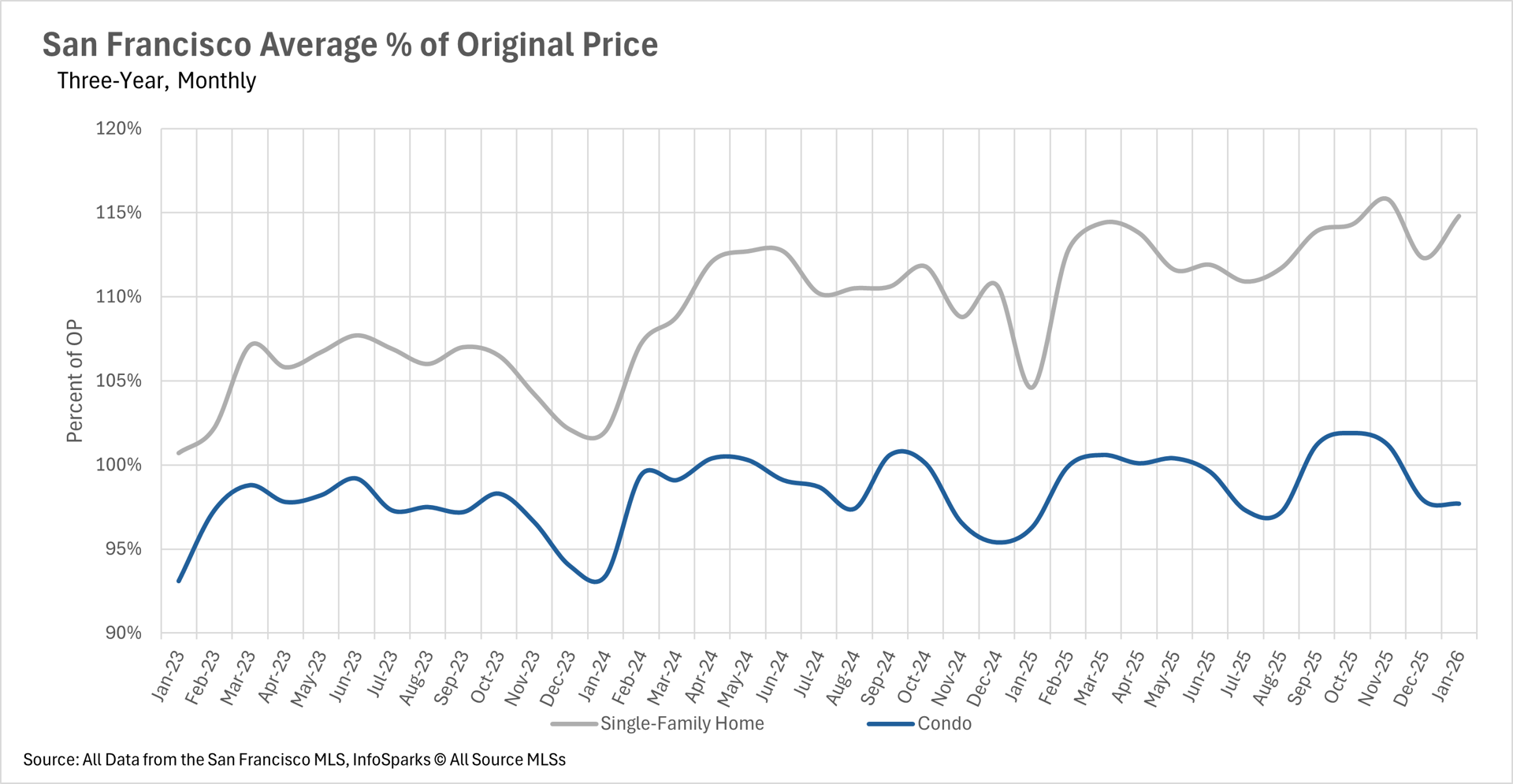
San Francisco's housing market roared into 2026 with remarkable year-over-year price appreciation. Single-family homes saw a stunning 16.23% increase in median sale price, with the median home selling for $1,653,325. Condos also posted gains, with the median sale price rising by 2.77% to $1,020,000. The demand for single-family homes remains exceptionally strong, with the average home selling for nearly 15% over the original asking price. Meanwhile, condos are selling at a slight discount, closing at 97.7% of list price on average.
Inventory remains at critically low levels across San Francisco
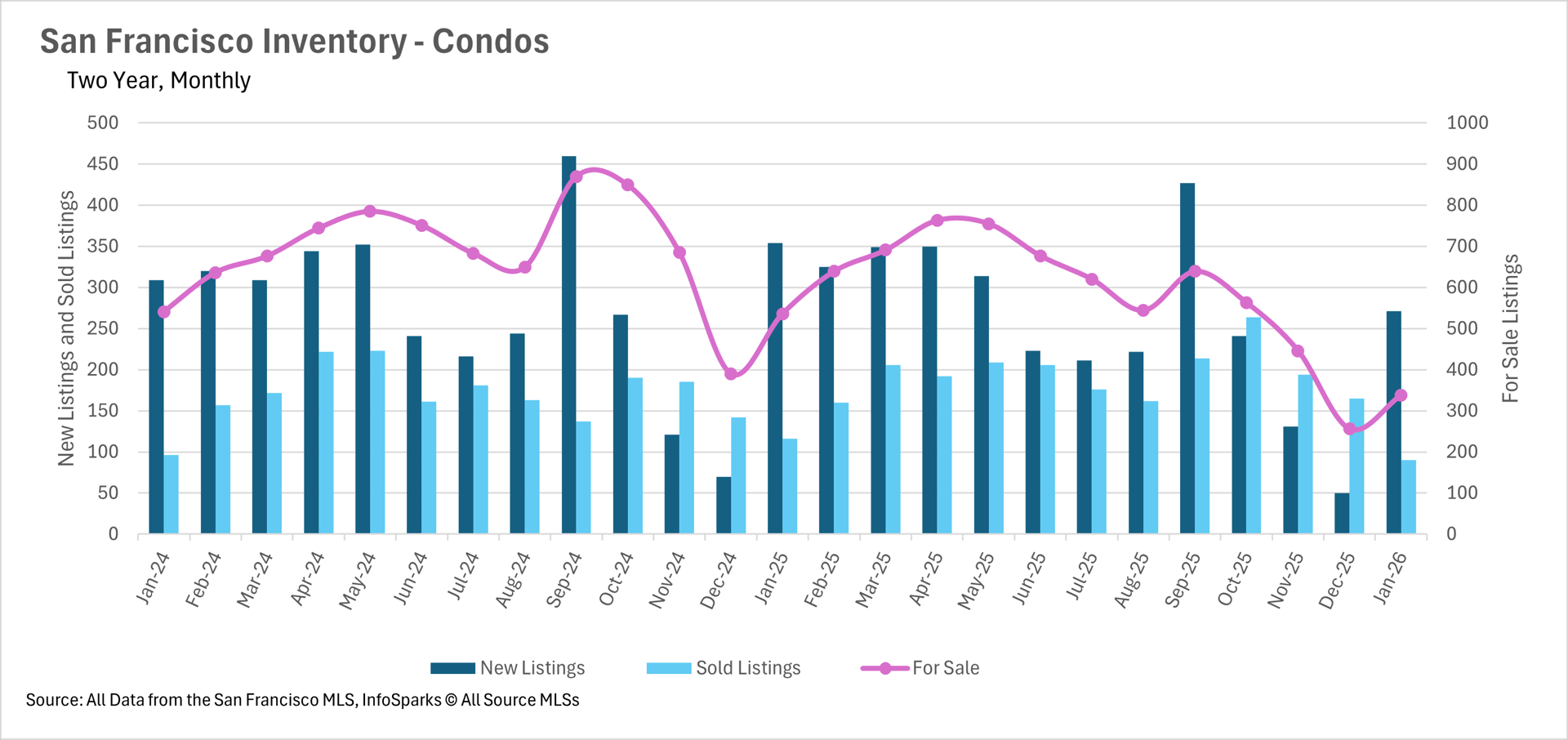
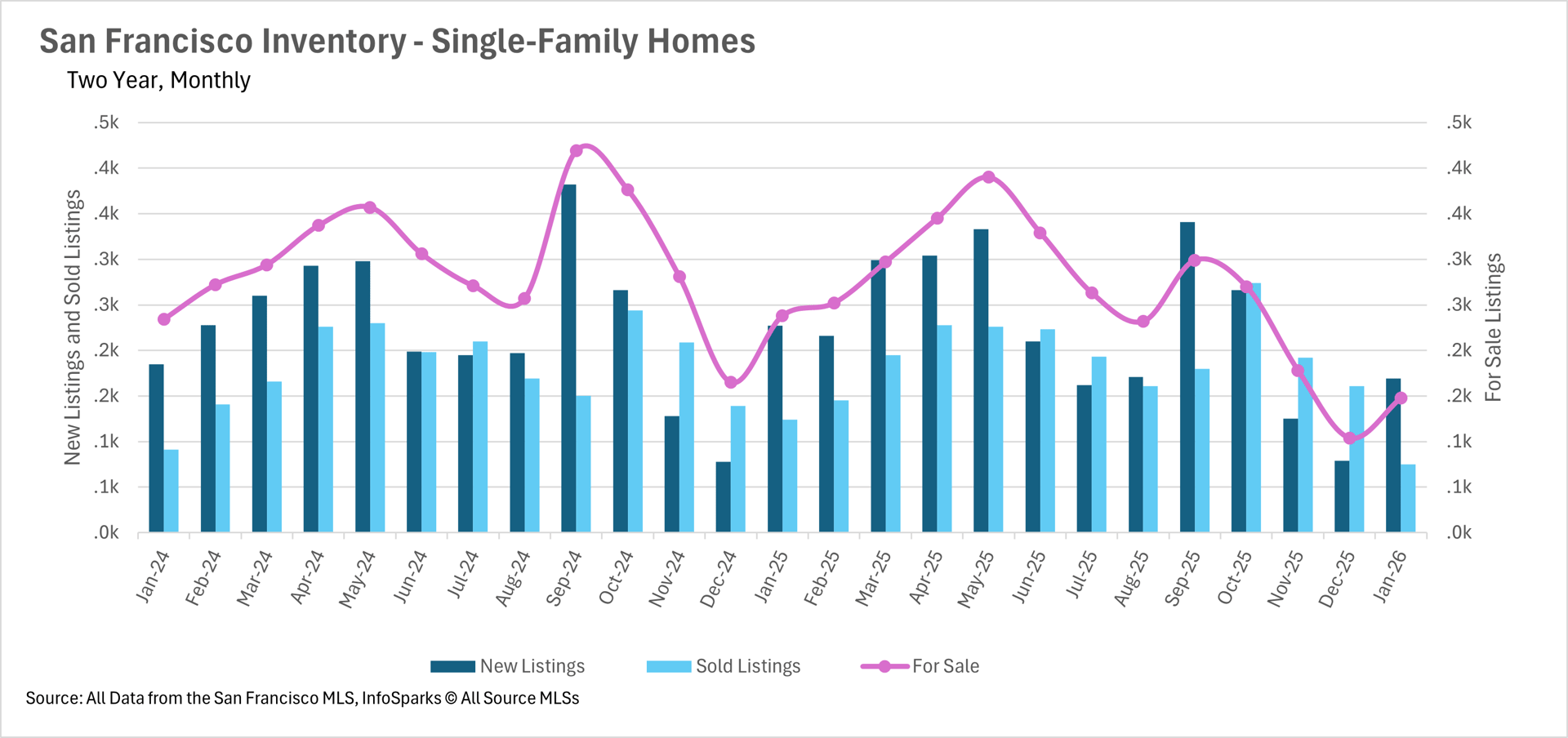
The inventory shortage that defined the end of 2025 has carried over into the new year. There are currently just 148 single-family homes for sale in San Francisco, representing a 37.82% decline compared to January 2025. The condo market is facing similar constraints, with inventory down 36.94% year-over-year to just 338 units. Combined, there are fewer than 500 homes available for sale in the entire city. While new listings did pick up from December's lows, the market remains starved for inventory, and buyers continue to face an extremely limited selection of properties.
Single family homes are selling at a blistering pace
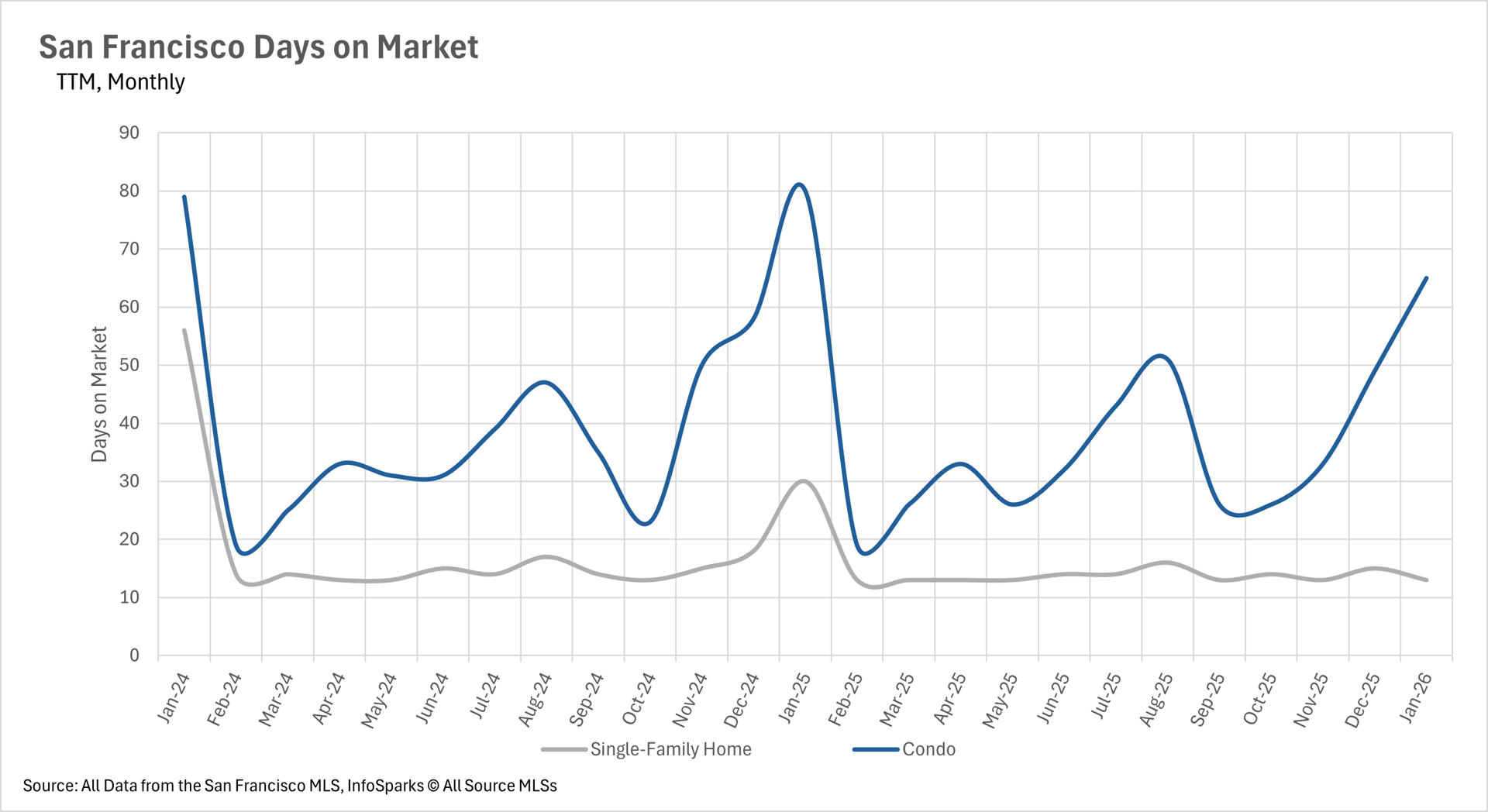
The severe inventory shortage has created an incredibly fast-moving market, particularly for single-family homes. The average single-family home is selling in just 13 days, representing a 56.67% decrease compared to last January when homes sat on the market for 30 days. Condos are also moving more quickly, with the average condo selling in 65 days, an 18.75% year-over-year decline. For single-family home buyers, this means there is virtually no time to deliberate before making an offer, and competition for desirable properties remains fierce.
San Francisco remains firmly entrenched in seller's market territory
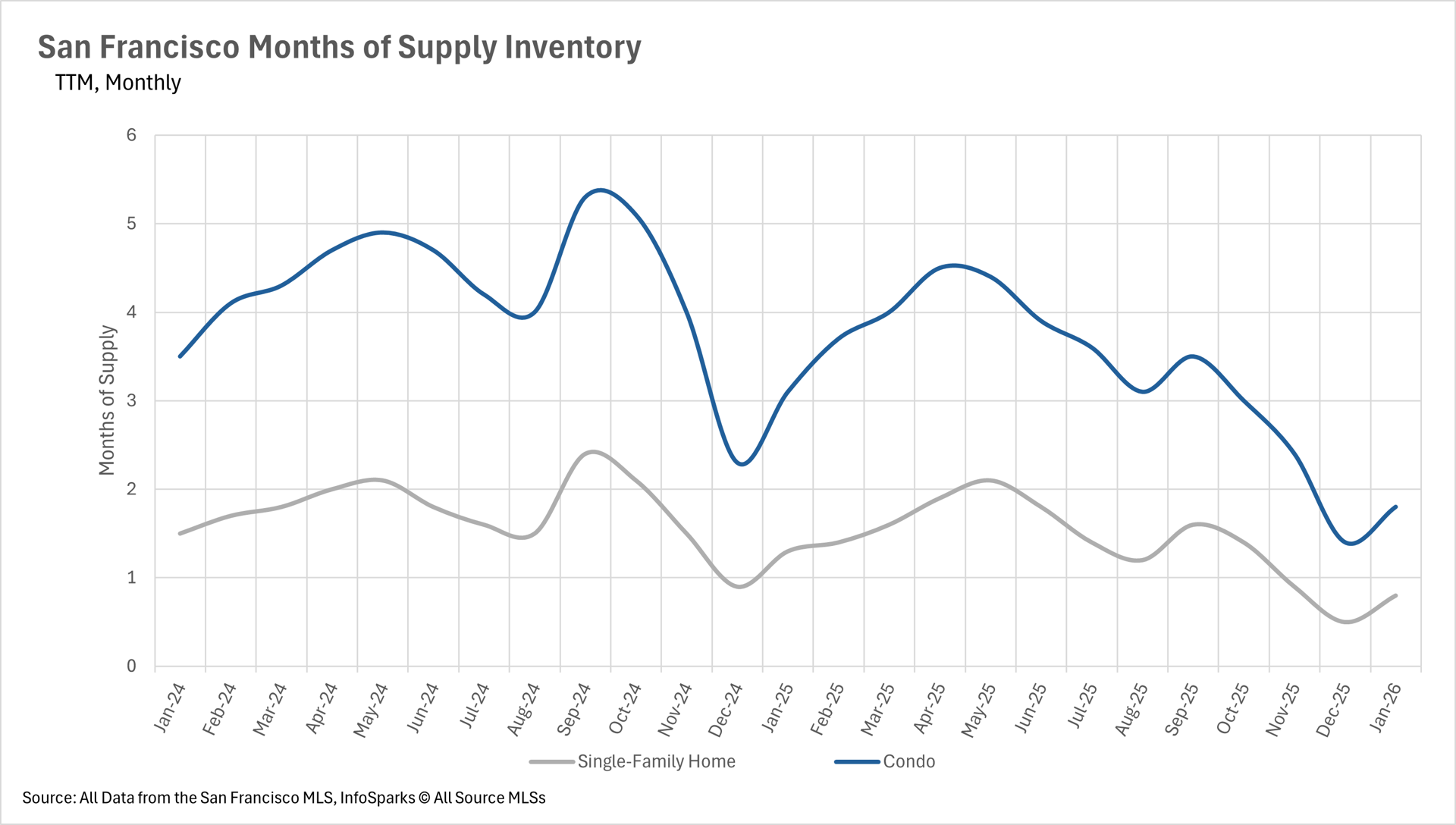
When determining whether a market is a buyers' market or a sellers' market, we look to the Months of Supply Inventory (MSI) metric. The state of California has historically averaged around three months of MSI, so any area with at or around three months of MSI is considered a balanced market. Any market that has lower than three months of MSI is considered a seller's market, whereas markets with more than three months of MSI are considered buyers' markets.
With just 0.8 months of single-family home inventory and 1.8 months of condo inventory on the market, the entire San Francisco market remains a strong seller's market. Both property types are well below the three-month threshold, giving sellers significant leverage in negotiations. Until substantial new inventory enters the market, buyers will continue to face stiff competition and limited options throughout San Francisco.
Local Lowdown Data